Voyage to Havana Part 3
So much of Havana’s history is linked with its old churches – it is sometimes astounding. After seeing the Santa Clara convent, my cousin Luly, an architect from Matanzas and Jorge, a Habanero with a passion for his city’s history, helped me continue my little quest along calle Cuba – seeking out two more churches: Espiritu Santo and Nuestra Senora de La Merced (La Merced).
Espiritu Santo is clearly the senior of the two structures – at least in years. Founded in the early 17th century as a small chapel for freed slaves in the impoverished Campeche neighborhood, it soon became Havana’s second parish church. Bishop Valdés, who would give his name to all the children taken into the city’s foundling home, was buried in the expanded church. Around 1772, Espiritu Santo received the unique right to offer sanctuary from the law. Both the Valdés name and the legend of sanctuary feature in Mercedes’ story – the Valdés name surprisingly (read the book to find out!) and the sanctuary she mentioned in Viaje a la Habana. The church is located just beyond the convent of Santa Clara and near the house of Mercedes’ grandmother, the Countess of Casa-Barreto, and has catacombs and burials including one of the Casa-Barreto slaves, Máximo Barreto in 1799.
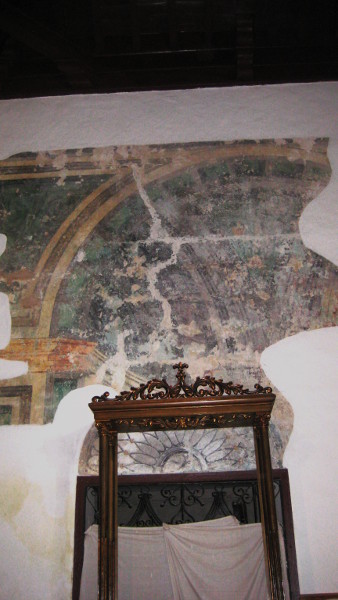
The stone walls of Espiritu Santo attest to its long history and the inside appears rather stark and severe – with just a trace of the old wall frescos remaining. Even after numerous refurbishments, it maintains its restrained air.
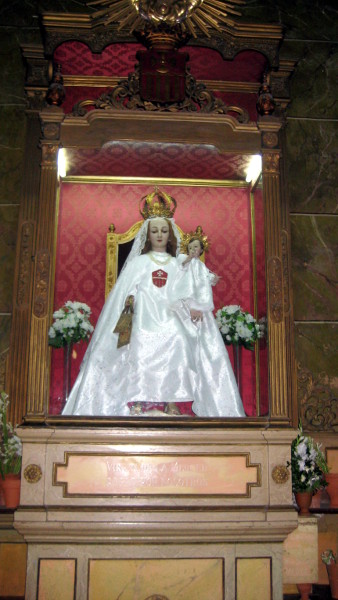
La Merced, by contrast, is a younger sister – founded around 1755 and only officially blessed in 1792. The later construction is clear in the baroque façade while an extensive rebuilding in the 1860s transformed the relatively poor church and convent into one of the most richly decorated temples in Cuba – full of paintings by well-known artists and elaborate embellishments. The interior also contains the beautifully dressed statue of the Our Lady of Mercy holding the infant Christ – all illuminated with endless small electric bulbs! By the early 20th century, La Merced hosted Havana’s smartest weddings.
Even more surprising to me, while there were some tourists around the two churches, there were many more locals within the church – as well as some congregating around the enormous wooden doors. The Catholic Church is experiencing a revival of sorts in Cuba – many old and formerly derelict churches have now been renovated (generally through foreign donations) and parish life even in small country towns has revived. But still – this seemed surprising in Old Havana. Jorge explained that these churches were also linked with one of the Cuban variations of religion – namely Santería – that blend of African deities and Catholic saints. Our Lady of Mercy was also known as the orisha Obatalá.
Mercedes’ father had a particular veneration for the Virgin of La Merced since, in his 1789 will, he requested burial in the church – dressed in the robes of the Royal and Military Order of La Merced. His request was never fulfilled as by his death, Bishop Espada of Havana had decreed all burials should take place in the new cemetery outside the city walls.
Bishop Espada also decreed special celebrations beginning nine days before and nine days after the feast day of Our Lady of Mercy, September 24. In his days the area around the church would fill with cheap food and gambling stalls while nearby houses hosted dances and more gambling for all levels of society. In the middle of all the mayhem, masses would be sung and processions led by the Virgin’s image would wind their way through the streets. The Cuban novelist, Cirilo Villaverde, vividly described the carnival-like atmosphere of these celebrations in his anti-slavery novel, Cecilia Valdés. This same novel contains numerous details taken from Mercedes’ family and walking around La Merced and gazing up at the white-robed Virgin, one can imagine those long-gone days in colonial Havana.
Buenos dias Alina, le prénom de Mercedes est-il Maria de las Mercedes ou Maria de la Merced – et son patronyme est-il Beltran de Santa Cruz ou de Santa Cruz ou Santa Cruz. Quelles sont les acceptions officielles ?
… and if not enough moderation, please disregard
Cher Jean-Pierre, question excellente!
Mercedes/Merced – c’est la même chose. Pour le baptême le prénom est : María de la Merced, mais pour le contrat de mariage, le mariage en Espagne, le baptême de Teresa Merlin et la pension militaire française : María de las Mercedes.
Son patronyme pour le contrat de mariage est “de Santa Cruz y Montalvo” mais elle a signé “Santa Cruz y Montalvo”. Aussi pour le mariage et le baptême de Teresa (Santa Cruz). D’autre part, son père, Joaquín s’appelait “de Santa Cruz” dans beaucoup de documents sauf le baptême de Mercedes ( Santa Cruz). Le patronyme original est Beltrán de Santa Cruz.
This is why I said she has so many names… and much confusion! In the book, I call her María de las Mercedes Santa Cruz y Montalvo — Mercedes.
Chère Alina, très intéressant, merci. Mercedes aurait-elle réussi à toucher sa pension militaire française ? Un refus éventuel m’étonnait compte tenu de ses bons rapports avec Louis Philippe d’Orléans.
Cher Jean-Pierre,
Oui, Mercedes a réussi à toucher sa pension militaire – éventuellement. Mais une pension bien modeste.
Thanks
Me gustaria saber cuando sera plublicado el libro; me luce interesante.
La Belle Créole se publica el 1 de Septiembre! Ya se puede ordenar en amazon.com y en otros sitios. En la primera página del website hay un botón que les lleva a la página de amazon.